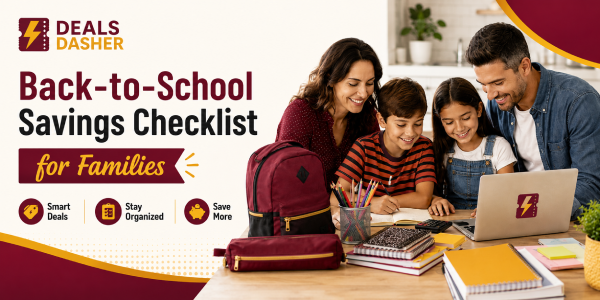
- Start back-to-school shopping with a written checklist instead of reacting to last-minute school lists.
- School supplies, kids clothing, lunch gear, tech accessories, and learning tools should be planned separately because each category has different deal timing.
- The best deal is not always the biggest percentage off; shipping, bundle size, quality, and return windows matter.
- Families can save more by checking both broad retailers and category-specific stores before checkout.
- Kids clothing purchases need extra care because sizing, growth, fabric, and return policies can affect the real value of a discount.
Back-to-school shopping has a way of sneaking up on families.
One week, summer still feels wide open. The next, you are looking at a school supply list, realizing the backpack from last year is falling apart, the sneakers are too small, the lunch containers have missing lids, and the tablet charger has somehow disappeared.
That is why the smartest back-to-school savings plan starts before checkout. Not with a coupon code. Not with a flash sale. Not with a cart full of “almost right” items.
It starts with a checklist.
A good back-to-school checklist helps families separate urgent purchases from optional ones, compare stores before prices rise, and avoid buying duplicates just because something looks discounted. It also gives you time to check places like DealsDasher before placing orders, so you can compare coupon codes, promo deals, free shipping offers, and store-specific discounts without rushing.
This guide breaks back-to-school shopping into practical sections: school supplies, kids clothing, shoes, tech, lunch gear, learning tools, home study spaces, family essentials, and last-minute purchases. It also lists relevant stores families can check while planning each part of the season.
Quick Answer: What Should Families Buy First for Back-to-School?
Families should buy required school supplies, properly sized kids clothing, shoes, backpacks, lunch gear, and learning tools first. These items affect the first week of school directly and often become harder to compare when deadlines get close.
Start with the official school list, then add real-life family needs: replacement uniforms, weather-appropriate clothing, notebooks, chargers, headphones, water bottles, labels, planners, and any online learning subscriptions your child may actually use.
The biggest savings usually come from buying in stages instead of one rushed order.
Why Back-to-School Shopping Gets Expensive So Quickly
Back-to-school shopping gets expensive because families rarely buy one type of product. A single school season can involve supplies, clothing, shoes, devices, accessories, lunch items, hygiene products, activity fees, sports gear, and learning resources.
That mix creates a problem: not every item should be bought from the same store.
A general retailer might be useful for notebooks, pencils, folders, and lunch bags. A clothing-focused store may be better for uniforms, jeans, shirts, socks, and shoes. A tech store may be better for laptops, tablets, calculators, headphones, or device protection. A learning platform may be better for extra practice, courses, or educational subscriptions.
This is where category planning matters. If you begin with Baby, Kids & Family deals, you can think about the school season as a full family shopping event instead of a single supply run. From there, it becomes easier to decide where school supplies, kids clothing, educational toys, and learning tools fit into the budget.
The Back-to-School Savings Checklist
Use this checklist as a planning framework before you buy anything. The goal is not to purchase every item immediately. The goal is to know what matters, what can wait, and where coupons or seasonal deals are most likely to help.
| Shopping Area |
Buy Early |
Compare Carefully |
Can Usually Wait |
| School supplies |
Required classroom list, notebooks, pencils, folders |
Bulk packs, bundles, art supplies |
Extra stationery, decorative items |
| Clothing |
Uniforms, socks, underwear, basic tops |
Jeans, jackets, multipacks, shoes |
Trend pieces, extra outfits |
| Tech |
Required devices, chargers, headphones |
Laptops, tablets, warranties, accessories |
Optional upgrades |
| Lunch gear |
Lunch boxes, bottles, containers |
Insulated bags, reusable sets |
Extra snack containers |
| Learning tools |
Required apps, books, subscriptions |
Courses, tutoring, skill platforms |
Enrichment tools |
| Family routine items |
Storage, labels, calendars, organizers |
Desk setups, backpacks, room lighting |
Decorative study items |
1. Start With the Official School List
The official school list should be the first filter for every purchase. It keeps families from buying supplies that look useful but never get used.
Before shopping, divide the list into three groups:
- Must-have items required by the school
- Nice-to-have items that support your child’s routine
- Optional extras that can wait until after the first week
This simple sorting step prevents one of the most common back-to-school mistakes: buying a cart full of discounted supplies that do not match the teacher’s actual requirements.
For school basics, the School Supplies coupons are the most relevant to check. This collection fits purchases like notebooks, folders, stationery, pencil cases, craft items, and other classroom essentials.
The practical rule is simple: do not let a sale rewrite the school list. A discounted 48-pack of markers is not a good deal if the class only asked for colored pencils.
2. Choose School Supplies by Use, Not Just Price
School supplies are easy to overbuy because many items are inexpensive individually. The problem is that small extras add up quickly.
Think through how each item will be used:
- Daily use: pencils, notebooks, folders, glue sticks, erasers
- Weekly use: markers, colored pencils, index cards, craft paper
- Occasional use: poster board, specialty binders, project materials
- Home backup: printer paper, tape, labels, spare chargers
Families often save more by buying durable basics than by grabbing the cheapest version of everything. A folder that tears in two weeks is not cheaper if it needs replacing before the term settles in.
For broad supply runs, 24Station coupon codes can be worth checking when comparing household, school, storage, or everyday-use products in one basket. If the order includes bulky or mixed items, pay close attention to shipping thresholds because free shipping can sometimes beat a small percentage discount.
3. Build a Kids Clothing Plan Around Growth
Kids clothing is one of the trickiest back-to-school categories because children grow quickly, sizes vary by brand, and seasonal weather changes can make early purchases less useful.
Start with clothing that solves immediate needs:
- School-approved tops
- Pants, jeans, skirts, or uniforms
- Socks and underwear
- Sneakers or school shoes
- Light layers
- Weather-appropriate outerwear
- PE or sports clothing
Then separate “first month of school” clothing from “later in the season” clothing. Buying every cold-weather item too early can backfire if your child grows or preferences change.
The Kids Clothing coupons at DealsDasher are a useful starting point for child-focused apparel. For broader family clothing, shoes, bags, accessories, and seasonal wardrobe needs, we also have Fashion & Apparel discounts that can help you compare a wider range of stores.
4. Check Clothing Stores by Need
Different stores make sense for different back-to-school clothing needs.
For everyday school outfits, Kohl’s coupon codes may be useful when families are comparing basics, multipacks, casual clothing, and seasonal wardrobe refreshes. For shoes, sneakers, and school footwear, Zappos promo codes are worth checking because footwear fit, delivery speed, and return convenience matter more than the headline discount alone.
For trend-led clothing or older kids who care about style, Zara discount codes can fit school-year wardrobe updates, especially when families are buying selected pieces rather than replacing everything at once.
For younger children, pretend-play items, doll clothing, accessories, or gift-style purchases, DoMiaMia promo codes and Eimmie coupon codes can be relevant when back-to-school shopping overlaps with birthdays, rewards, or classroom-themed play.
For baby and toddler essentials that may still be part of the family budget during school season, BC Babycare coupons and Babeside discount codes can help parents compare family purchases beyond the older child’s school list.
5. Do Not Ignore Shoes, Bags, and Everyday Wear
Shoes and backpacks are not exciting purchases, but they often determine how smoothly the school week goes.
Before buying, check:
- Shoe size with room for growth
- School dress code
- Backpack size and weight
- Strap comfort
- Water bottle pocket
- Lunch box fit
- Weather resistance
- Return policy
A cheap backpack that cannot hold folders, lunch, and a water bottle is not a bargain. The same goes for shoes that look good online but do not survive playground use, PE, walking routes, or daily wear.
For families comparing larger marketplaces, Amazon promo codes can be useful for backpacks, lunch accessories, labels, small supplies, and replacement items. Just make sure you compare the final price, delivery date, reviews, and whether the discount applies to the exact product in your cart.
6. Compare General Retailers for Mixed Back-to-School Carts
Some back-to-school carts are messy because families need a little bit of everything: notebooks, socks, water bottles, headphones, snacks, storage bins, and maybe a new desk lamp.
For these mixed baskets, broad retailers can be useful.
Target coupon codes can fit families who want to combine school supplies, kids clothing, home items, lunch gear, and personal care in one order. Walmart promo codes can be useful for value-focused supply runs, backpacks, tech basics, household items, and repeat essentials. eBay coupons may help when families are comparing refurbished tech, calculators, books, school accessories, or replacement items.
The important thing is to compare the final cart, not just the discount label.
A store with a smaller coupon may still be cheaper if the base price is lower. Another store may win because shipping is faster. A third may be better because returns are easier if a backpack, jacket, or pair of shoes does not work out.
7. Plan Tech Purchases Early
School technology purchases should not be left until the final week unless there is no other choice. Devices, chargers, headphones, tablets, laptops, calculators, styluses, and protective cases often require more comparison than notebooks or folders.
Before buying tech, ask:
- Is the device required by the school?
- Does the school recommend specific specs?
- Will the child use it daily or occasionally?
- Is a cheaper accessory enough?
- Is refurbished acceptable?
- Does the warranty matter?
- Is the software compatible with school platforms?
- Will shipping arrive before school starts?
For laptops, tablets, headphones, and larger device purchases, Best Buy coupon codes are worth comparing because electronics deals are often tied to models, bundles, protection plans, and seasonal events. For tablets, laptops, accessories, and education-focused devices, Apple coupons can be relevant when families are already committed to the Apple ecosystem.
A useful rule: do not upgrade because a device is discounted. Upgrade because the current device no longer supports the schoolwork, apps, storage, battery life, or reliability your child needs.
8. Think Beyond Devices: Chargers, Headphones, and Cases Matter
Back-to-school tech budgets often get eaten up by accessories after the main device has already been purchased.
Common extras include:
- Charging cables
- Power adapters
- Headphones or earbuds
- Laptop sleeves
- Tablet cases
- Screen protectors
- USB drives
- Mouse or keyboard
- Webcam covers
- Stylus pens
- Extension cords
- Desk lamps
These smaller items are easy to forget, but they can create last-minute expenses. Check what you already own before buying duplicates. Then label anything that goes to school.
If your child needs a drawing tablet, creative display, or digital art accessory for school projects, design classes, or creative hobbies, XPPen deals can be worth reviewing. Just check compatibility with the device your child already uses.
9. Do the Lunch Gear Audit
Lunch gear is one of the easiest back-to-school categories to underestimate.
Before buying new items, pull everything out and check:
- Lunch boxes
- Snack containers
- Water bottles
- Thermos containers
- Ice packs
- Bento boxes
- Food jars
- Reusable utensils
- Labels
- Cleaning brushes
Replace items that leak, have missing lids, or are hard to clean. Keep backups simple. A child does not need five water bottles if only two are reliable and dishwasher-safe.
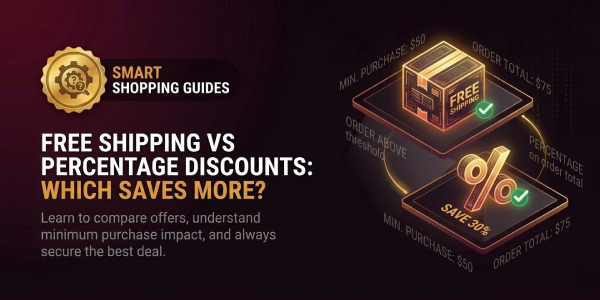
This is also where free shipping and bundle deals can matter. Lunch gear is often low-to-mid priced, so a free shipping offer may save more than a small percentage discount. For a deeper comparison, families can use the DealsDasher guide on free shipping vs percentage discounts before choosing which promotion gives the better final price.
10. Add Learning Tools Without Overloading the Child
Learning tools can be valuable, but only when they match the child’s needs and routine.
The best learning purchase is not always the most advanced one. A younger child may need reading practice, puzzles, or hands-on activities. An older student may need a course, a writing tool, a math platform, or a research subscription. Some children need tutoring. Others simply need a quiet space and better organization.
The Education & Learning coupons category can help families compare online courses, language learning, tutoring tools, skill development platforms, and academic resources.
For enrichment, documentary learning, and curiosity-led education, Curiosity University coupons and Curiosity Stream promo codes can be useful when families want educational content outside traditional school assignments.
Before paying for any learning subscription, check:
- Monthly vs annual pricing
- Free trial terms
- Cancellation rules
- Age level
- Subject coverage
- Parent controls
- Whether the child will realistically use it
A discounted annual plan is only a good deal if the student will keep using it after the first week.
11. Set Up a Simple Study Space
A study space does not need to look like a catalog. It needs to reduce friction.
For many families, that means:
- A clear writing surface
- Good lighting
- A place for chargers
- A small supply caddy
- A folder or tray for school papers
- A calendar or planner
- Noise control when possible
- A consistent homework location
Do not overspend on decor before the routine is clear. Start with function. Add comfort later.
For desk accessories, craft storage, stationery, labels, folders, or home organization, Panda Office coupons may fit families building a more organized school setup.
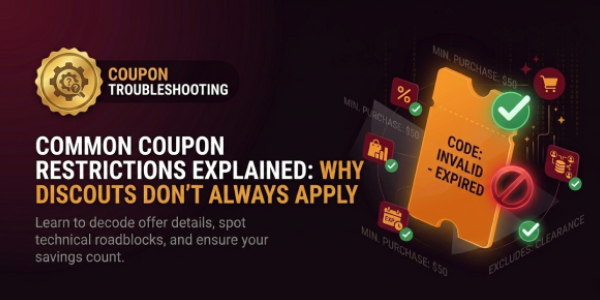
12. Watch for Coupon Restrictions Before Checkout
Back-to-school shopping is full of restrictions because retailers often run multiple promotions at once.
A code may fail because:
- It applies only to full-price items
- It excludes clearance products
- It has a minimum spend
- It is for new customers only
- It cannot be combined with another deal
- It excludes specific brands
- It has expired
- It applies only in certain regions
- It does not work on marketplace items
This matters during school shopping because families often mix sale items, multipacks, clearance clothing, and seasonal products in one cart. One excluded item can change the value of the whole order.
Before assuming a code is bad, read the offer terms and compare another deal from the same store. The DealsDasher guide to common coupon restrictions is useful when a back-to-school promo code looks valid but does not apply at checkout.
13. Buy in Stages Instead of One Panic Order
The easiest way to overspend is to do all back-to-school shopping in one rushed evening.
A staged plan works better:
Stage 1: Six to Eight Weeks Before School
Buy durable basics, backpacks, tech, shoes, and anything that needs sizing, shipping, or setup time.
Stage 2: Three to Five Weeks Before School
Buy classroom supplies, lunch gear, clothing basics, uniforms, and home study items.
Stage 3: One to Two Weeks Before School
Fill gaps from the official list, replace missing items, and handle teacher-specific requests.
Stage 4: After the First Week
Buy extras only after you know what your child actually uses.
This approach gives families more time to compare stores, wait for better promotions, and avoid duplicates.
14. Store Checklist: Where Families Can Compare Back-to-School Deals
Here is a practical store-by-store breakdown for back-to-school shopping:
| Store | Best For | What to Check |
|
24Station |
Mixed family items, storage, school-adjacent products |
Shipping terms, product range, coupon exclusions |
|
Babeside |
Family and clothing-related purchases |
Sizing, clearance terms, returns |
|
BC Babycare |
Baby and toddler family essentials |
Age range, product details, shipping |
|
DoMiaMia |
Kids accessories, play items, gift-style purchases |
Age suitability, included pieces |
|
Eimmie |
Playtime items, child-focused gifts, outfits |
Discount terms, product category |
|
Kohl’s |
Kids clothing, basics, school outfits |
Minimum spend, stackability, sale exclusions |
|
Zappos |
Shoes and school footwear |
Sizing, returns, delivery speed |
|
Zara |
Trend-led school clothing |
Size charts, seasonal stock, returns |
|
Amazon |
Supplies, accessories, lunch gear, replacements |
Delivery date, seller, reviews, coupon eligibility |
|
Target |
Mixed school supplies, clothing, home items |
Cart total, pickup options, category exclusions |
|
Walmart |
Budget basics, supplies, household items |
Base price, shipping, marketplace terms |
|
Best Buy |
Laptops, headphones, tablets, tech accessories |
Specs, warranty, model year |
|
Apple |
Tablets, laptops, accessories |
Compatibility, education needs, long-term use |
|
eBay |
Refurbished tech, calculators, books, replacements |
Seller rating, condition, return policy |
|
Curiosity University |
Educational subscriptions and courses |
Annual vs monthly cost, usage |
|
Curiosity Stream |
Educational documentaries and learning content |
Subscription terms, family use |
15. Common Back-to-School Shopping Mistakes
Buying Everything Too Early
Buying early can save money, but buying too early can cause sizing problems. This is especially true for shoes, uniforms, jeans, jackets, and sports clothing.
Ignoring the Return Window
A discount loses value if the item cannot be returned. Always check return rules before buying clothing, shoes, backpacks, tech, or expensive supplies.
Choosing the Biggest Discount Automatically
A 30% discount is not always better than free shipping. A bundle is not always cheaper than individual items. A clearance item is not useful if it does not fit the school’s requirements.
Forgetting Delivery Time
A back-to-school deal is only useful if it arrives before school starts. Check delivery estimates before choosing an online-only offer.
Buying Too Many “Cute” Supplies
Kids love fun supplies, but classrooms often require specific colors, folder types, notebook sizes, or labeling systems. Buy the required version first, then add personality where it makes sense.
Paying for Learning Tools Nobody Uses
Subscriptions are easy to start and easy to forget. Before paying annually, test whether the child enjoys the platform and whether it fits the school schedule.
16. Final Back-to-School Savings Checklist
Before you place your final orders, run through this list:
- Do I have the official school supply list?
- Have I checked what we already own?
- Are clothing sizes current?
- Do shoes still fit comfortably?
- Is the backpack still usable?
- Do lunch containers have matching lids?
- Are chargers, headphones, and cases working?
- Does any tech need setup before school starts?
- Have I compared at least two stores for larger purchases?
- Have I checked coupon terms before checkout?
- Does the deal apply to my actual cart?
- Is shipping included or affordable?
- Can I return clothing, shoes, or tech if needed?
- Am I buying for the first month, not the entire year?
- Have I left room in the budget for teacher-specific requests?
Conclusion: The Best Back-to-School Deal Is the One That Fits the Plan
Back-to-school savings are not just about finding one big coupon code. Families save more when they shop with a plan, compare categories, buy in stages, and focus on the final checkout price.
Start with required school supplies. Add clothing and shoes based on current sizing. Compare tech carefully. Choose learning tools based on actual use. Keep lunch gear practical. Then check store pages and category pages before paying.
A good back-to-school checklist keeps the season calmer, cheaper, and less rushed. And when the cart is ready, a quick coupon check can still make a real difference.
Frequently Asked Questions
When should families start back-to-school shopping?
Families should start planning six to eight weeks before school begins, especially for clothing, shoes, backpacks, tech, and items that require shipping. Classroom supplies can often be purchased closer to the start date once the official school list is available.
What back-to-school items should I buy first?
Buy required classroom supplies, shoes, backpacks, uniforms or clothing basics, lunch gear, and required tech first. These items affect the first week of school directly and are harder to replace quickly if sizes, shipping, or availability become a problem.
Are back-to-school bundles always cheaper?
Not always. Bundles can save money when every item is useful, but they can also include extras you do not need. Compare the bundle price against buying only the required items separately.
Is free shipping better than a back-to-school coupon code?
Free shipping can be better on smaller orders or bulky items, while percentage discounts usually help more on larger carts. Compare the actual dollar value of each offer before choosing.
How can families save on kids clothing for school?
Check size charts, buy core basics first, compare multipacks, avoid overbuying seasonal items too early, and review return windows. Kids grow quickly, so buying too far ahead can waste money if sizes change.
Should I buy school tech new or refurbished?
It depends on the school requirements, warranty, condition, and how long the device needs to last. Refurbished tech can save money, but families should check seller reputation, return rules, battery condition, and compatibility.
Are educational subscriptions worth buying for back-to-school?
Educational subscriptions can be worth it when they match the child’s age, subject needs, and routine. Start monthly or with a trial when possible, and avoid annual plans unless you are confident the child will use the platform consistently.
What is the biggest back-to-school shopping mistake?
The biggest mistake is buying quickly without checking the school list, existing supplies, sizes, shipping costs, and coupon restrictions. A rushed order often leads to duplicates, wrong sizes, missed discounts, and items that do not match the classroom requirements.
 24Station
 Amazon
 Apple
Apple
 Babeside
 Bcbaby Care
 Best Buy
 Curiosity Stream
 Curiosity University