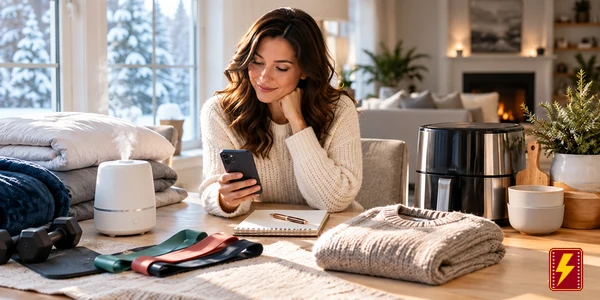

- Prepare around six friction points—arrival, sleep, bathroom, charging, morning routine, and departure—instead of buying from a generic guest-room checklist.
- Spend first on real comfort problems such as worn bedding, poor pillows, inaccessible charging, weak lighting, or too few towels.
- Skip guest-only decor and hotel-style extras unless they will still be useful after the holidays.
- Give guests enough information and self-serve options to manage ordinary needs without repeatedly asking the host.
- Use evergreen household purchases, varied deals and promo-code comparisons, and final-price checks before buying anything specifically for the visit.
Overnight guests do not need your home to feel like a boutique hotel. They need to know where to put their bag, how to get a decent night’s sleep, which towel is theirs, how to charge a phone, what happens in the morning and whether they are accidentally disrupting the household.
That is a much cheaper standard to meet than “upgrade the guest room.” It is also usually a better one. A spare bedroom with expensive cushions can still feel awkward if the only outlet is hidden behind the bed. A simple room can feel easy and thoughtful when the basics are obvious and guests do not have to ask for every small thing.
The most useful way to prepare for holiday houseguests is therefore not to make a long shopping list. It is to find the friction points in the stay, fix the ones that matter, and avoid spending on upgrades that look impressive but solve no real problem.
Use a friction map instead of a guest-room checklist
Walk through the stay in the same order your guest will experience it:
- Arrival
- Sleep
- Bathroom
- Charging and Wi-Fi
- Morning routine
- Departure
At each stage, ask two questions:
- What might make the guest uncomfortable or force them to ask for help?
- Can I solve that with something I already own before buying anything?
This keeps the budget focused on useful hospitality rather than seasonal shopping.
1. Arrival: make the first ten minutes obvious
If guests are arriving from another city, do not make the household plan depend on a perfect flight or traffic day. Share the arrival instructions early and use the Thanksgiving travel guide for the itinerary, airport, hotel and driving decisions that can change an arrival window.
The first awkward moment often happens before anyone reaches the guest room. Guests arrive with coats, shoes, bags, gifts and sometimes food. If there is no obvious place for any of it, the hallway becomes storage and the host starts directing traffic while also trying to welcome everyone.
Decide where luggage goes before guests arrive
A luggage rack is useful, but it is not essential. A sturdy bench, low table, empty chair or clear section of floor can work just as well.
The important part is giving the suitcase a home so it does not sit in a walkway or end up opened across the bed for the entire stay.
If the room genuinely lacks any practical surface, compare furniture that will still be useful after the holidays rather than buying a guest-only piece. Ashley Furniture discount codes may be useful when a bench, small dresser or side table solves a permanent gap, while furniture deals at DealsDasher make more sense when you want to compare several options first.
Clear one real storage space
You do not need an empty wardrobe.
Give guests one of the following:
- a few hangers;
- one empty drawer;
- a clear shelf;
- a set of wall hooks;
- a basket for smaller items.
The point is to avoid making guests live out of a half-zipped suitcase on the floor.
Tell guests the household basics once
A short welcome note can save repeated explanations.
Include only practical information:
- Wi-Fi name and password;
- which bathroom to use;
- where towels are;
- how to adjust heating or cooling if they can;
- rough breakfast timing;
- anything unusual about locks, pets or parking.
This is not about turning your house into a rental property. It is about giving guests enough information to function without feeling as though they need permission for every ordinary action.
2. Sleep: spend here before spending on decor
If you buy only one thing for an overnight stay, buy it because the sleeping setup is genuinely uncomfortable—not because a guest-room article said every bed needs four decorative pillows.
Test the bed yourself
Spend a few minutes lying on it. Better still, sleep on it for one night if you can.
You may discover:
- the mattress dips;
- the pillows are flat;
- the room gets much colder than the rest of the house;
- streetlight comes through the curtains;
- there is nowhere to put glasses or a phone;
- the bed squeaks badly.
Those problems matter more than new artwork.
When new bedding is actually worth buying
Replace bedding when it is worn, uncomfortable, the wrong size or not enough for the number of guests.
For sheets, pillows or a duvet you genuinely need, compare Sunday Bedding deals or Nest Bedding coupons rather than upgrading automatically. If you need to shop more broadly, bedding and mattress deals at DealsDasher can help you compare options without treating the guest room as a separate design project.
Layering is more useful than guessing the perfect blanket
People sleep at different temperatures.
A simple setup works well:
- clean sheets;
- a normal duvet or comforter;
- one extra blanket within reach.
That gives guests control without forcing the host to predict whether someone sleeps hot or cold.
Two usable pillows beat a pile of decorative ones
If you have enough pillows, offer a little variation in firmness rather than quantity for its own sake.
Decorative cushions usually end up on the floor.
Darkness and quiet may cost nothing
Before buying blackout curtains, check whether you already have:
- a blind that is not fully closing;
- a hallway light shining under the door;
- a bright charger or appliance LED;
- a noisy fan that can be moved.
Small adjustments can improve sleep without turning the room into a renovation.
Buy blackout curtains only if the problem is real
If morning light genuinely makes the room difficult to sleep in, then curtains may be a useful long-term purchase. But verify the problem first.
3. Bathroom: reduce guessing, not just clutter
A guest bathroom does not need a basket of miniature luxury products. It does need to be easy to understand.
Make towels unmistakable
Put the towels somewhere obvious and tell guests they are theirs.
For each person, a practical setup is:
- one bath towel;
- one hand towel if needed;
- access to a clean washcloth if your household uses them.
If you genuinely need to replace worn towels or add enough for a larger group, Bed Bath & Table promo codes can be worth comparing. Bath & Body deals at DealsDasher are more useful for comparing practical bathroom purchases than for filling the room with extras guests may never open.
Put spare toilet paper where a guest can find it
This is a small detail that prevents an unnecessarily awkward question.
Keep at least one spare roll visible or in an obvious cabinet.
Provide forgotten essentials, not a spa menu
A small backup kit is useful:
- toothbrush;
- toothpaste;
- basic shampoo or body wash;
- sanitary products where appropriate.
You do not need robes, slippers, face masks, bath salts and hotel-style amenity bottles unless those are already normal household items.
Clear enough counter space for a toiletry bag
The most useful “upgrade” may be moving your own products into a drawer for two days.
If the bathroom is shared, explain the rhythm
Guests are often more comfortable when they know:
- who needs the bathroom early;
- when children are getting ready;
- whether there is a second mirror or sink;
- where they can leave toiletries.
This matters more than matching towels.
4. Charging and Wi-Fi: cheap problems to solve before bedtime
Modern guests may forgive a plain room faster than a room where they cannot charge a phone.
Make one outlet easy to reach
Do not assume guests will crawl behind furniture.
If the nearest outlet is awkward, use a safe extension solution or charging hub suited to the space. charging accessory deals at DealsDasher can help when you genuinely need a multi-port charger or cable setup.
Do not buy a drawer full of spare cables
A single multi-device solution can be more useful than keeping old cables for every phone standard you remember.
Write the Wi-Fi password somewhere visible
Guests should not need to ask for it again after you told them while they were carrying three bags.
Bedside lighting matters more than ceiling brightness
A guest should be able to switch off the light without crossing a dark room.
If the space genuinely lacks a usable bedside lamp, compare a small lamp or wall light that will still be useful year-round. 1StopLighting discount deals may be worth checking, while lighting deals at DealsDasher give you more options if the room needs a permanent fix.
5. Morning routine: make breakfast easy without becoming room service
For Thanksgiving-weekend stays, keep breakfast and guest snacks separate from the main dinner budget. The Thanksgiving dinner budget guide is useful for protecting the meal guests care about without letting every extra grocery purchase blend into one oversized bill.
Morning is where overnight hosting becomes work if every guest needs something different.
The easiest solution is not a large breakfast. It is a breakfast people can understand without waiting for the host.
Tell guests what breakfast looks like
Something as simple as this is enough:
“Coffee is on the counter, cereal is in that cupboard, milk is in the fridge, and we will make eggs around nine.”
Now early risers and late sleepers both know what to do.
Choose a self-serve base
Useful options include:
- toast;
- fruit;
- yogurt;
- cereal;
- coffee;
- tea.
You can still make one cooked item without creating a full brunch menu.
Buy better coffee only if your household will keep using it
If coffee is part of the holiday routine and you are already running low, Big Island Coffee Roasters discount codes can be worth checking for specialty coffee. Otherwise, use what you normally drink. Coffee and Tea deals at DealsDasher are useful when you want to compare several options without turning breakfast into another holiday shopping project.
Ask about dietary needs before the visit
One direct question can prevent waste:
“Is there anything you cannot eat, or anything simple you normally have for breakfast?”
That is better than buying multiple backup foods nobody touches.
6. Departure: plan the exit before the stay begins
A good visit can become awkward when nobody knows when the guest is leaving or what should happen with bedding and towels.
Agree on departure timing early
This does not need to be formal.
A simple “What time are you thinking of heading out on Sunday?” helps the household plan breakfast, transport and cleanup.
Do not make guests guess about sheets
Some hosts want guests to strip the bed. Others would rather they leave it alone.
Tell them if it matters.
Give used towels one destination
A hamper, bath, laundry basket or bathroom floor can work. The point is to avoid hunting for wet towels later.
What is actually worth buying before guests arrive?
Spend when a purchase fixes a real comfort or logistics problem that will still matter after the visit.
Usually worth considering
- fresh pillows if the existing ones are worn out;
- enough clean bedding for every sleeping space;
- enough towels for the number of guests;
- a safe charging solution if outlets are inaccessible;
- a bedside lamp if the room has no practical light;
- a mattress topper if the sleeping surface is genuinely uncomfortable.
Sometimes worth considering
- blackout curtains;
- a small bench or luggage surface;
- additional hangers or hooks;
- an air mattress or sofa-bed solution for occasional overflow.
Usually safe to skip
- matching decorative pillows;
- guest-only robes;
- slippers in multiple sizes;
- hotel-style amenity bottles;
- holiday-themed bedding;
- a decorative tray bought only for the guest room;
- a mini coffee station when the kitchen is ten steps away.
Use the “will this still be useful in January?” rule
Holiday hosting creates a strong excuse to buy things.
Before checkout, ask:
Will we still use this after the guests leave?
If yes, the purchase may be a sensible household upgrade.
If no, compare the cost with a simpler workaround.
Do not buy a new mattress because guests are coming once
If the bed is genuinely poor and you already intended to replace it, hosting can be a useful deadline.
But an occasional guest does not automatically justify a large furniture purchase.
Try these lower-cost steps first:
- rotate the mattress if appropriate;
- add a topper;
- replace worn pillows;
- improve bedding;
- adjust temperature and light.
Sleeping in a living room needs a different plan
Not every household has a spare bedroom.
A living-room setup can work well if you account for privacy and household schedules.
Before converting a shared room, decide:
- who goes to bed first;
- who wakes first;
- where bedding is stored during the day;
- where the guest changes clothes;
- whether early risers can reach the kitchen without disturbing them.
Those practical questions matter more than whether the temporary bed looks attractive during the day.
Hosting children requires less styling and more predictability
Children need a clear sleeping space, easy bathroom access and a predictable morning plan.
Useful extras may include:
- night-light;
- water bottle;
- safe place for a favorite toy;
- simple breakfast options.
Do not overfill the room with breakable decor to make it “special.”
Older guests may need different practical considerations
Ask about comfort rather than making assumptions.
Check:
- whether stairs are difficult;
- whether the bed is too low;
- whether the path to the bathroom is clear;
- whether there is enough light at night;
- whether a chair with arms would be useful.
These are often solved by rearranging what you already own.
Pets change the overnight plan too
If your household has pets, tell guests before they arrive.
Ask about:
- allergies;
- fear of animals;
- bedroom boundaries;
- whether doors must remain closed.
Vacuuming pet hair from the sleeping area may matter more than decorating it.
Clean for comfort, not for inspection
You do not need to deep-clean every cupboard.
Prioritize:
- fresh bedding;
- clean bathroom;
- clear floors;
- dust-free bedside surfaces;
- clean drinking glasses;
- empty trash bins.
If you need to restock supplies you already use, cleaning supply deals at DealsDasher can help with ordinary household purchases. Do not create an entirely new cleaning cabinet for one visit.
A three-day preparation plan that avoids last-minute shopping
Three days before
- Confirm arrival and departure timing.
- Ask about dietary needs.
- Test the bed.
- Count towels and bedding.
- Check whether outlets and lighting work.
Two days before
- Wash bedding and towels.
- Clear luggage and clothing space.
- Buy only the missing essentials.
- Plan breakfast.
One day before
- Make the bed.
- Clean the bathroom.
- Set out towels.
- Write down Wi-Fi details.
- Clear one bedside surface.
- Put spare toilet paper somewhere visible.
On arrival day
- Open the room briefly for fresh air if appropriate.
- Check temperature.
- Put water nearby.
- Clear the entryway.
- Tell guests the few household details they actually need.
How to shop without turning the visit into a spending event
If you are also responsible for Thanksgiving dinner, treat meal logistics as a separate project. The Thanksgiving hosting guide covers kitchen capacity, guest flow, serving and leftovers so overnight preparation does not compete with the cooking plan.
Once you identify a real gap, compare the final price rather than buying the first holiday-hosting recommendation you see.
For bulky home purchases, delivery charges can erase a discount. Our guide to free shipping versus percentage discounts can help when you are comparing furniture, bedding or home orders with different shipping terms.
If a retailer is already running a seasonal sale, test additional offers carefully rather than assuming every code stacks. The guide to coupon stacking explains when combining promotions may work and when it usually will not.
The easiest test: can the guest manage an hour without asking you anything?
Imagine your guest wakes up before you.
Can they:
- find the bathroom?
- find a towel?
- connect to Wi-Fi?
- charge a phone?
- get water?
- make coffee or tea?
- know whether breakfast is happening later?
If yes, the setup is probably doing its job.
That kind of independence is more welcoming than constantly hovering and asking whether someone needs anything.
Final takeaway
The best overnight-hosting purchases are rarely the glamorous ones. They are the things that solve a real problem: better pillows, enough towels, accessible charging, workable lighting or bedding that is actually comfortable.
Everything else should earn its place.
Give guests room for their belongings, make the sleeping setup comfortable, make the bathroom obvious, explain the morning routine and let them know how the household works. A home can feel generous without trying to imitate a hotel, and it can feel thoughtful without becoming an excuse for another round of holiday spending.
Frequently Asked Questions
What do overnight guests actually need?
A comfortable place to sleep, clean bedding, towels, easy bathroom access, charging, Wi-Fi information, somewhere for luggage and a clear idea of the morning routine cover most of the essentials.
Do I need to buy new bedding for holiday guests?
Only if the bedding you have is worn, uncomfortable, the wrong size or insufficient for the number of guests. Clean, comfortable bedding matters more than whether it is new.
Should I provide toiletries for overnight guests?
A few backup basics are useful, especially a toothbrush, toothpaste and ordinary shampoo or body wash. You do not need a full hotel-style amenity collection.
How many towels should I provide per guest?
At minimum, provide a clean bath towel for each person and make any hand towels or washcloths they may need easy to find.
What should I put in a guest room for charging?
Make at least one safe outlet easy to access. A multi-port charger or extension solution can help when existing outlets are hidden behind furniture.
What is the easiest breakfast for overnight guests?
A self-serve base such as toast, cereal, yogurt, fruit, coffee and tea works well. Add one cooked item if you want without creating a full brunch menu.
Do I need a dedicated guest room?
No. A living room, office or other temporary sleeping space can work if the bed is comfortable, the guest has some privacy and the household plans around different sleep schedules.
How can I make overnight guests comfortable without spending much?
Clear storage space, make outlets easy to reach, write down the Wi-Fi password, put towels somewhere obvious, add an extra blanket and explain the household routine. Most of these cost nothing.