
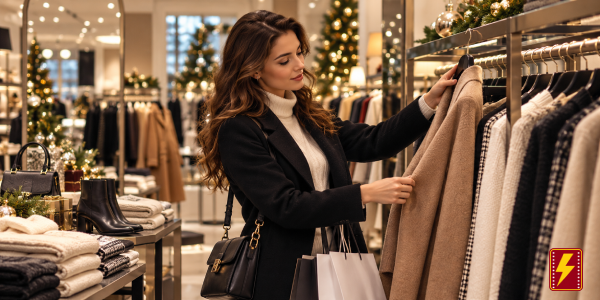
- Judge Black Friday fashion deals by wardrobe value—fit, cost per wear, fabric, return terms and styling range—not percentage off alone.
- Use brand-specific measurements rather than assuming your usual size will transfer across retailers, especially for jeans, shoes and fitted pieces.
- Treat final-sale terms, return shipping and care requirements as part of the purchase price before checking out.
- Buy basics and high-use items when a sale lowers the cost of something you already wear; avoid letting threshold discounts create extra purchases.
- A fashion deal should fill a real wardrobe gap and work with clothes you already own before coupons or promo codes influence the decision.
A fashion discount is only useful if the item survives the trip from checkout to your actual wardrobe.
That sounds obvious, but Black Friday makes clothing decisions unusually easy to distort. A coat looks like a bargain because it is 40% off. A pair of shoes feels “too good to miss” because the sale ends tonight. A dress gets added to the basket even though you do not have an occasion for it, because the crossed-out price makes the purchase feel more responsible than it really is.
The better way to shop fashion sales is to ask whether the item will earn its place after the sale is over. That means looking at fit, return risk, fabric, construction, styling range, cost per wear and whether the purchase fills a real wardrobe gap. For purchases beyond clothing, the Black Friday shopping guide offers a wider checklist for comparing savings, seller terms and return risk.
Black Friday can be excellent for fashion when it helps you buy something you already needed at a meaningfully lower price. It becomes expensive when the discount itself creates the need.
Start with wardrobe gaps, not sale categories
Before browsing, list the pieces you genuinely need.
That could be:
- a winter coat;
- work trousers;
- comfortable everyday shoes;
- a formal outfit for a specific event;
- replacement basics;
- a practical bag;
- cold-weather layers.
Then separate those from “nice if the price is exceptional” purchases.
This gives you two lists:
- planned purchases;
- optional purchases.
That distinction matters because Black Friday pages are designed to blur it.
For 2026, apparel discounts are expected to be strongest on Black Friday
Adobe's current holiday forecast expects apparel discounts to peak around 23% off listed prices, with Black Friday forecast to be the strongest average day for apparel.
That makes Black Friday a sensible day to watch clothing, but it does not mean every item on Friday is cheaper than every earlier sale.
If the exact coat, shoes or trousers you researched already hit your target price before Black Friday, buying earlier can be reasonable.
The useful sequence is:
- know the normal selling price;
- set a target price;
- check the return policy;
- buy when the exact item meets your standard.
Use cost per wear before discount percentage
Cost per wear is a simple idea:
purchase price ÷ realistic number of wears.
A $180 coat worn 90 times costs about $2 per wear.
A $45 trend piece worn three times costs $15 per wear.
The cheaper item costs more every time it is actually used.
Cost per wear is especially useful for:
- coats;
- boots;
- workwear;
- jeans;
- bags;
- formalwear;
- quality knitwear.
It is less useful for items where emotional value or a one-off event is the point. The goal is not to turn every purchase into a spreadsheet. It is to stop a large percentage discount from disguising a low-use purchase.
The first fashion deal test: would you buy it at the normal price?
This does not mean you should actually pay full price.
It means the item itself should be desirable before the discount is considered.
If you would never choose the color, cut or fabric at regular price, the sale probably is not improving the item.
The second test: can you make three outfits with clothes you already own?
Before buying, picture the item with your existing wardrobe.
If a jacket only works with trousers, shoes and a bag you do not own yet, its true cost is higher than the sale price.
A practical fashion purchase usually connects to several pieces you already wear.
Fit risk is one of the biggest hidden costs in online fashion
Clothing sizes remain inconsistent across brands, which is why the size label alone is a weak basis for an online purchase. Use the retailer's garment measurements, compare them with a similar item you already own, and treat an unfamiliar brand as a higher fit-risk purchase.
That does not mean every retailer has poor sizing. It means the size label itself should not be treated as enough information.
Measure a garment you already own and like
This is often more useful than relying only on body size.
For a similar garment, measure:
- chest or bust;
- waist;
- hip;
- shoulder width;
- sleeve length;
- inseam;
- rise;
- garment length.
Then compare those measurements with the retailer's garment chart when available.
Do not assume your usual size transfers across brands:
A medium in one brand may fit like a small or large elsewhere.
Use:
- brand-specific size guide;
- customer reviews mentioning fit;
- model measurements;
- fabric stretch;
- cut description.
If you already know how a brand fits you, that confidence has real value on Black Friday because it lowers return risk.
Jeans, shoes and fitted dresses deserve extra caution
These categories are particularly sensitive to fit.
For jeans, check:
- waist measurement;
- rise;
- inseam;
- leg shape;
- stretch percentage.
For shoes, check:
- brand sizing;
- width;
- heel height;
- toe shape;
- return conditions for worn footwear.
If you already know the fit, Aldo Shoes promo codes can be worth comparing for a planned pair, while Dr Scholls Shoes deals may make more sense when comfort is the main requirement. For a broader comparison, shoe deals at DealsDasher can help you shop across different styles.
Return policy is part of the price
The FTC recommends checking refund terms, return shipping and restocking fees before buying online, with extra attention to sale items because policies can differ from regular purchases.
For fashion, ask:
- Are Black Friday items final sale?
- How long is the return window?
- Who pays return shipping?
- Can the item be returned in store?
- Are original shipping fees refunded?
- Are discounted products exchange-only?
A $10 cheaper dress can become the more expensive purchase if returning it costs $12.
Final sale needs a higher confidence threshold
Only buy final-sale fashion when:
- you know the brand;
- you know the size;
- you have checked measurements;
- the color is versatile for your wardrobe;
- the price is low enough that the risk is acceptable.
Do not treat “final sale” as a small footnote.
Bracketing can hide the real shopping cost:
Ordering three sizes with the intention of returning two may feel safe, but it can create:
- larger temporary card charges;
- return fees;
- multiple trips to parcel shops;
- refund delays;
- risk of missing the return window.
When the retailer provides useful measurements or fit tools, using them can be cheaper than treating returns as part of the fitting room.
Fabric content matters more than the brand name on a sale page
Read the fiber composition.
For knitwear, outerwear and trousers, the material mix affects:
- warmth;
- breathability;
- drape;
- pilling;
- stretch;
- wash care;
- durability.
A heavily discounted sweater can still be poor value if it pills quickly or requires care you will not realistically provide.
Natural fibers are not automatically better:
Wool, cotton, linen and silk can be excellent materials.
Synthetics can also be useful for:
- stretch;
- weather resistance;
- durability;
- easy care;
- performance clothing.
Judge the fabric against the job the garment must do.
Check construction when buying coats, trousers and bags
Look for:
- lining;
- seam finish;
- zipper quality;
- button attachment;
- pocket construction;
- hem finish;
- reinforcement at stress points.
A lower price is not a saving if the garment needs repair immediately.
Outerwear deserves a function-first check
A winter coat is often one of the larger fashion purchases of the season.
Before comparing discounts, decide:
- temperature range;
- rain or snow exposure;
- commuting method;
- length;
- hood requirement;
- layering space.
Outerwear and jacket deals at DealsDasher can help when you already know the kind of coat you need.
Do not buy a fashion coat when you need a weather coat:
They can overlap, but not always.
If you walk or use public transport in bad weather, waterproofing, insulation and hood design may matter more than silhouette.
Basics can be one of the smartest Black Friday fashion purchases
Adobe expects Cyber Week sales of clothing basics to rise sharply in 2026 as shoppers use holiday promotions to stock up on essentials.
That can be sensible when you are replacing:
- T-shirts;
- underwear;
- socks;
- leggings;
- plain knitwear;
- work shirts;
- children's basics.
The key is to buy what you already use rather than stocking up simply because the unit price is lower.
Do not buy six versions of a basic before testing one:
If you have never worn the brand, buy conservatively.
A great unit price does not help if the fabric twists, the neckline stretches or the sizing is wrong.
Trend pieces need a shorter cost-per-wear horizon
A trend can be worth buying if you genuinely enjoy it.
Just do not evaluate it like a classic coat.
Ask:
- Will I still like this next season?
- Can I wear it at least five to ten times?
- Does it work with clothes I own?
- Would I want it if social media stopped showing it tomorrow?
Black Friday is a poor excuse to build a fantasy wardrobe:
Sale events make it easy to shop for an imagined version of your life.
Common examples:
- formalwear for events you do not attend;
- heels when you always wear flats;
- dry-clean-only clothes when you avoid dry cleaning;
- statement pieces when you prefer simple outfits;
- gym clothes for a routine you have not started.
Buy for the life you actually live.
Luxury fashion needs authentication and return checks
A luxury discount can involve:
- older-season stock;
- outlet-specific products;
- third-party marketplace sellers;
- final-sale conditions.
If the brand or retailer is unfamiliar, verify:
- seller identity;
- authenticity policy;
- return process;
- warranty or after-sales support where relevant.
Circle Fashion discount codes can be one comparison point when you are shopping higher-end labels you already know. For broader browsing, luxury fashion deals at DealsDasher can help you compare options more deliberately.
Outlet and off-price shopping needs product-level comparison
Do not assume an outlet item is identical to the full-price product with a similar name.
Check:
- fabric composition;
- style code;
- lining;
- hardware;
- construction;
- original selling channel.
Pre-owned fashion can beat new Black Friday pricing
For certain brands and categories, resale can offer better value than buying new during a sale.
This is especially useful for:
- coats;
- bags;
- occasionwear;
- premium denim;
- designer pieces.
Momox Fashion coupons may be worth checking when pre-owned clothing fits the purchase. The important comparison is condition and final price, not simply “new versus used.”
Second-hand needs its own quality checklist
Check:
- condition grade;
- measurements;
- fabric wear;
- stains;
- repairs;
- return policy;
- authenticity process for higher-value pieces.
Alterations can rescue a good purchase
Not every fit issue requires a return.
Simple alterations may improve:
- trouser length;
- waist fit;
- sleeve length;
- dress hem;
- strap length.
Before returning an otherwise excellent garment, compare the alteration cost with the value of keeping it.
But do not buy badly fitting clothes because tailoring exists:
Some alterations are easy.
Others are expensive or can change the garment's balance.
Shoulder width, armholes, complex jackets and heavily constructed garments are more difficult.
Shoes need cost per wear and comfort together
A pair of shoes can look like good value because leather or branding suggests quality.
If the fit is poor, it does not matter.
For everyday shoes, think about:
- walking distance;
- arch support;
- width;
- sole grip;
- heel height;
- weather;
- repairability.
Comfort is not something to “break in” indefinitely
Some materials soften.
A shoe that causes major pressure, numbness or instability in the fitting stage is unlikely to become a smart purchase simply because it was on sale.
Accessories can refresh a wardrobe more cheaply than replacing it
If your clothing already works, Black Friday may be better used for:
- belt;
- bag;
- scarf;
- jewelry;
- practical winter accessories.
Accessory deals at DealsDasher can help when a small addition solves the styling gap better than a new outfit.
Do not buy a bag without testing what must fit inside:
Think about:
- phone;
- wallet;
- keys;
- laptop or tablet;
- water bottle;
- charger;
- daily work items.
A beautiful bag that cannot carry your normal essentials quickly becomes low-use.
Workwear should be judged by weekly rotation
If you work in an office or client-facing environment, a useful Black Friday purchase may be one that completes several weekday combinations.
Prioritize:
- trousers that work with multiple tops;
- jackets that layer easily;
- shoes suitable for a full day;
- shirts that do not require difficult care.
Occasionwear should be bought against a real event
Formalwear is one of the easiest categories to overbuy because sale prices make special pieces feel collectible.
Ask:
- What event is this for?
- When is it?
- Does the return window extend until I can try the full outfit?
- What shoes and outerwear will I use?
Modest, plus-size and specialist fit categories need stronger measurement checks
When proportions or coverage matter, the size label gives even less information.
Check:
- garment length;
- sleeve length;
- rise;
- stretch;
- lining;
- opacity;
- cut.
The DealsDasher fashion collections include more specific shopping routes such as plus-size fashion deals, modest fashion deals and sustainable fashion deals when those better match the purchase.
Do not assume “sustainable” means durable
Sustainability claims can describe:
- materials;
- manufacturing;
- packaging;
- labor practices;
- recycled content.
Those can matter, but durability still deserves its own evaluation.
A product that wears out quickly may be poor value regardless of the marketing language.
Care requirements are part of ownership cost
Check the label before buying.
Ask:
- machine wash?
- hand wash?
- dry clean?
- air dry?
- iron?
If you know you will not follow the care instructions, the garment is less likely to stay in good condition.
Dry-clean-only basics can become expensive basics
A $60 discounted garment that needs frequent professional cleaning can cost much more than an $80 washable alternative.
Estimate care over the period you expect to own it.
Shipping thresholds can create unnecessary wardrobe additions
If free shipping starts at $100 and your planned purchase is $76, adding a $24 top you do not need is not a shipping saving.
Compare:
- paying the shipping fee;
- store pickup;
- another retailer;
- a planned second item.
Our guide to free shipping versus percentage discounts explains why the smaller-looking offer can sometimes produce the lower total.
Promo codes can be useful, but fashion exclusions are common
Retailers may exclude:
- premium brands;
- new arrivals;
- designer labels;
- sale merchandise;
- gift cards.
If the Black Friday code will not apply, our guide to common coupon restrictions can help identify the usual reasons.
Do not chase a code by changing the purchase:
If the coat you wanted is excluded, do not switch to a worse coat merely because a 20% code applies to it.
The product decision comes first.
Bundles and “buy more, save more” deals are particularly risky in fashion
Offers such as:
- buy two, get one free;
- 20% off $100, 30% off $200;
- extra discount above a basket threshold;
can be useful when your planned purchases already reach the threshold.
They become expensive when the discount persuades you to add another garment.
Use a keep-rate test before buying from unfamiliar fashion brands
If you have never ordered from the retailer, assume some fit risk.
Start with fewer items.
If the sizing, fabric and quality work for you, future sale purchases become easier.
Social-media fashion deals need retailer verification:
The FTC warns that scammers can impersonate known brands and advertise unusually cheap products through social media.
If the deal came from an unfamiliar ad:
- check the website address;
- search the seller name with “review,” “complaint” or “scam”;
- check return information;
- avoid unusual payment demands;
- keep your order records.
Black Friday fashion should improve the wardrobe, not enlarge the return pile
Before checkout, ask:
- What wardrobe gap does this fill?
- Can I make at least three outfits with what I already own?
- Have I checked the exact measurements?
- Is the return policy acceptable?
- Is the fabric appropriate for how I will use it?
- Will I follow the care instructions?
- What is the realistic cost per wear?
- Would I want this if it were not on sale?
The “buy now” fashion test
Buy when:
- the item fills a real need;
- the size confidence is good;
- the price meets your target;
- the return terms are reasonable;
- the garment works with your existing wardrobe.
The “wait” fashion test
Wait when:
- you are unsure about sizing;
- the price is only a routine promotion;
- the item needs other purchases to work;
- you have not compared fabric or measurements;
- the retailer's return policy is unclear.
The “walk away” fashion test
Walk away when:
- the sale created the desire for the item;
- you are buying for an imaginary lifestyle;
- the garment is final sale and fit confidence is low;
- you need to buy several more pieces to make it wearable;
- the low price is the only thing you like about it.
Buy clothes that fit your real wardrobe
The strongest Black Friday fashion deal is not the biggest wardrobe addition. It is the piece that solves a real need at a price that makes sense, fits properly, works with clothes you already own and survives beyond the excitement of sale week.
Use the discount after you have judged fit, construction, fabric, care and return terms. Think in cost per wear rather than percentage off. Buy basics because you already use them, trend pieces because you genuinely enjoy them, and premium items because their quality earns the extra spend.
A sale can lower the price of a good wardrobe decision. It cannot turn a bad wardrobe decision into a good one.
Frequently Asked Questions
Is Black Friday a good time to buy clothes?
It can be. Adobe's current 2026 forecast expects apparel discounts to be strongest on Black Friday, but the best purchase is still an item you already need in the right size, fabric and return conditions.
How do I know whether a Black Friday clothing discount is good?
Compare the sale price with the item's normal selling price, then consider fit risk, return costs, fabric quality and how often you expect to wear it.
Should I order multiple sizes and return the ones that do not fit?
That can reduce fit risk but may create return fees, refund delays and larger temporary charges. Use garment measurements and brand-specific fit information first when possible.
Are final-sale Black Friday clothes worth buying?
Only when your fit confidence is high and the price is low enough to justify the risk. Be especially careful with unfamiliar brands and fitted items.
What clothing is best to buy on Black Friday?
Planned replacements, basics, coats, workwear, shoes and other high-use items often make the most sense because a strong discount improves their cost per wear.
Is cost per wear useful for fashion shopping?
Yes, especially for higher-priced items. It helps distinguish a more expensive garment you use constantly from a cheap item that spends most of its life in the wardrobe.
Are outlet fashion products the same as full-price products?
Not always. Compare fabric, style codes, construction and product descriptions instead of assuming similar-looking items are identical.
What is the biggest Black Friday fashion mistake?
Buying because the discount makes an item feel urgent even though it does not fit a real wardrobe need, has uncertain sizing or requires several more purchases to become wearable.