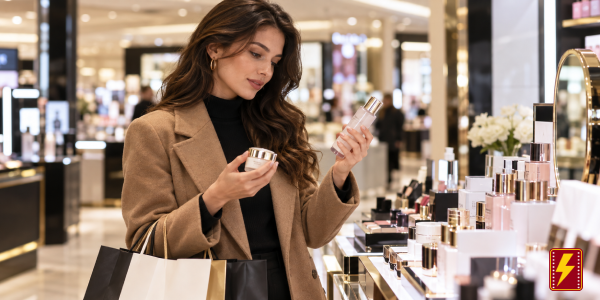
- Judge Black Friday beauty deals by usable value: count only the products, shades, scents and tools you would genuinely use.
- Stock up most confidently on proven replacements, and match backup quantities to how quickly you finish products and their practical shelf life.
- Treat shade certainty, fragrance familiarity, return terms and expiry risk as part of the purchase price before buying bundles or limited editions.
- Evaluate expensive beauty tools by cost per use, warranty and whether they replace something already in your routine—not by the size of the discount.
- Use promo codes, gifts and free-shipping thresholds to lower a planned basket rather than as reasons to add products you did not intend to buy.
A beauty set can advertise $300 of value and still be a bad $90 purchase.
The reason is simple: stated value and usable value are not the same thing. If half the shades do not suit you, the skincare duplicates products you already own, the fragrance is something you have never smelled, or the device solves a problem you do not actually have, the crossed-out number on the box does not matter.
Black Friday is one of the easiest times to overbuy beauty because the category is built around discovery, minis, bundles, gift sets and limited editions. Those can be excellent value when they replace products you were already going to buy. They can also turn one planned moisturizer into a drawer full of unopened products.
This guide uses a stricter standard: buy beauty by what you will actually use, finish and repurchase—not by the size of the advertised saving. For purchases in other categories, the main Black Friday guide applies the same principle to shipping, specifications, returns and full ownership cost.
The first beauty deal test: replacement, experiment or temptation?
Every product in the basket should fit one of three groups.
Replacement
You already use it and are running low.
This is usually the safest Black Friday purchase because you know:
- the shade;
- the formula;
- how quickly you finish it;
- whether it works for your skin or hair;
- whether the sale price is actually better than normal.
Experiment
You want to try something new and the sale lowers the cost of testing it.
This can be sensible when:
- the size is small;
- the return policy is reasonable;
- you are not buying five experiments at once;
- the product solves a real need.
Temptation
You had not considered the product until the discount appeared.
That does not automatically make it a bad purchase. It does mean the sale created the demand, so it deserves more scrutiny.
Usable value is more important than stated value
Beauty gift sets often compare the set price with the combined retail price of every product inside.
That comparison can be mathematically correct and still be misleading for your own budget.
Use this calculation instead:
Usable value = value of the products you would genuinely buy or use on their own.
If a $100 set contains:
- $60 moisturizer you already love;
- $35 serum you want to try;
- $30 cleanser you would not buy;
- $25 eye cream you already own;
- $20 mini fragrance you dislike;
the advertised value may be $170, but your personal usable value might be closer to $95.
That makes the $100 set much less impressive.
Count product sizes, not just product names
A set may contain:
- full size;
- travel size;
- deluxe sample;
- single-use sample.
Do not compare a travel-size serum with the full-size retail price.
If you want to calculate the set properly:
- find the full-size price;
- find the full-size quantity;
- calculate the approximate value per milliliter, gram or ounce;
- apply that to the size in the set.
This is especially useful for skincare and fragrance.
Black Friday is a good time to restock known products
The safest beauty savings usually come from products you already finish consistently.
Examples include:
- cleanser;
- moisturizer;
- shampoo;
- conditioner;
- body care;
- foundation in a known shade;
- mascara you replace regularly;
- fragrance you already wear.
If your normal skincare is nearly finished, Dr Brandt Skincare promo codes can be worth comparing for products you already know, while skincare deals at DealsDasher can help you compare a broader set of brands.
Do not stock up faster than you can use the products:
The FDA explains that cosmetics do not all have a fixed legal expiration date in the United States, but they do have shelf lives that vary by product, use and storage.
Over time:
- preservatives can break down;
- water-and-oil formulas can separate;
- products can dry out;
- heat, moisture and air can change color, texture or smell;
- repeated applicator use can introduce microorganisms.
A three-pack is only cheaper when you can use it before quality becomes a problem.
Mascara is a poor bulk-buy candidate
The FDA notes that eye-area cosmetics tend to have shorter shelf lives and says manufacturers commonly recommend discarding mascara roughly two to four months after purchase.
That makes a six-pack of mascara much less attractive unless several people are sharing the unopened products as gifts.
Do not buy a year's supply simply because the unit price looks low.
Sunscreen needs a stricter expiry check
In the United States, sunscreen is regulated as an over-the-counter drug rather than an ordinary cosmetic.
FDA guidance says sunscreens generally need an expiration date unless testing shows stability for at least three years. If a sunscreen has no expiration date, FDA says it should be considered expired three years after purchase.
This is important for Black Friday stock-up deals.
Do not buy a large sunscreen bundle unless you know:
- how quickly you use it;
- the expiry date where present;
- how it will be stored.
Makeup: shade certainty should decide how aggressive you get
A large foundation or concealer discount is only useful when the shade works.
Shade uncertainty is highest when:
- you have never used the brand;
- the formula oxidizes;
- the retailer uses a different shade naming system;
- the product is final sale;
- you are buying online without samples.
If you already know the shade, LadyMakeup PL discount codes can be worth checking for selected makeup products. For a wider search, makeup deals at DealsDasher can help you compare more options.
Do not let a palette sell you ten shades you will never use:
Eyeshadow and complexion palettes often look like strong value because the cost per shade is low.
But cost per shade matters only if you use the shades.
Before buying a palette, count:
- shades you would use weekly;
- shades you would use occasionally;
- shades you would never use.
If most of the palette falls into the third group, a single or smaller palette can be better value even at a higher cost per shade.
Lip sets have the same problem:
A five-piece lip set is not a bargain if only one shade works for your complexion or routine.
Consider:
- undertone;
- finish;
- how often you wear bold colors;
- whether you already own similar shades.
Skincare: routine fit matters more than ingredient hype
A heavily discounted active ingredient can still be a poor purchase if your routine already contains similar products.
Before buying a new serum or treatment, ask:
- What problem am I trying to solve?
- Do I already use another product targeting the same thing?
- Will this fit into my current routine?
- Am I likely to introduce several new products at once?
Introducing too many new products simultaneously also makes it difficult to tell which product caused irritation if something goes wrong.
“Hypoallergenic” is not a guarantee:
FDA consumer guidance says buyers should not assume a product cannot cause an allergic reaction simply because it is labeled “hypoallergenic”; the FDA does not define that term for cosmetics.
The same caution applies to broad marketing language such as “natural.”
Read the ingredient list when you know you react to specific ingredients.
Do not buy skincare for a future routine you are unlikely to maintain:
A ten-step routine can look exciting inside a gift box.
If your real routine is cleanser, moisturizer and sunscreen, buying seven additional steps may create clutter rather than improvement.
Purchase for the routine you will realistically follow.
Haircare: liter sizes can be excellent value when the formula is proven
Large shampoo and conditioner bottles can make sense when:
- you already use the formula;
- several people in the household use it;
- the product has reasonable shelf stability;
- the discount per unit is meaningful.
Haircare deals at DealsDasher can help when you are comparing known products or planned replacements.
Do not buy salon-size bottles of an untested formula:
A liter bottle becomes expensive quickly if the shampoo leaves your scalp uncomfortable or the conditioner is too heavy for your hair.
Try smaller sizes first when the formula is new to you.
Hair tools: calculate cost per use, not just discount depth
Hair tools can be some of the highest-priced Black Friday beauty purchases.
Examples include:
- hair dryers;
- straighteners;
- curling tools;
- multi-stylers;
- heated brushes.
For an expensive tool, ask:
- How often will I use it?
- Does it replace a tool I already own?
- Is the attachment set actually useful?
- Is the warranty strong?
- Can replacement parts or accessories be bought?
- Does the voltage work where I live or travel?
A bundle of attachments is not automatically more value:
If you will use two of six attachments, count the value of the two.
The same usable-value rule that applies to beauty sets applies to tools.
LED masks and beauty devices need a purpose before a price
Beauty devices are increasingly prominent in sale events.
Before buying, decide:
- what result you expect;
- how frequently the device must be used;
- whether you will realistically follow that schedule;
- whether consumables or replacement parts are required;
- whether the device has meaningful warranty support.
A device is poor value when consistency is required and you know it will stay in a drawer after the first month.
Do not use a discount as proof that a beauty device works:
Price reduction and product effectiveness are separate questions.
Research the device first. Judge the deal second.
Fragrance is a high-risk blind buy
Fragrance descriptions can tell you notes, concentration and style. They cannot tell you exactly how the fragrance will smell on your skin.
If you already know the scent, The Fragrance Shop coupons or FragranceShop.com deals can be worth comparing. Fragrance deals at DealsDasher can help you look across more stores.
Sampler sets can reduce fragrance risk
A sampler can be useful when it includes scents you actually want to test and offers a way to redeem for a full-size bottle where applicable.
Check:
- sample volume;
- number of fragrances;
- redemption terms;
- eligible full-size options;
- expiry or voucher deadline.
Do not value fragrance minis at full-size price per milliliter without context:
Mini bottles can be more expensive per milliliter in normal retail, which can inflate the claimed value of a set.
If your purpose is testing or travel, that smaller format may still be useful. Just do not confuse collectible mini pricing with money you would actually have spent.
Gift sets: calculate recipient value, not your own excitement
A beauty set makes a good gift when it matches the recipient.
Ask:
- Do they use this brand?
- Do you know their shade?
- Do they wear fragrance?
- Do they have ingredient sensitivities?
- Would a gift card or sampler remove risk?
The bigger the personalization requirement, the higher the gifting risk.
Beauty advent calendars can have huge stated values and low usable value
Beauty calendars, discovery sets and gift boxes often advertise a large gap between purchase price and stated retail value. Treat that number as a starting point only; the useful value is the portion you would genuinely choose, use or give away.
That can be genuine on paper.
Before buying, divide the contents into:
- products you already use;
- products you actively want to try;
- products you would gift;
- products you probably will not use.
If the fourth group is large, the calendar's headline value is not your value.
Beauty boxes create the same accumulation problem
Subscription boxes can feel economical because each month's retail value exceeds the subscription fee.
Look at your actual usage:
- How many products from the last three boxes are unopened?
- How many became regular purchases?
- How many are duplicates?
A discount on a subscription you do not fully use is not a saving.
Free gifts can push the basket past what you planned to spend:
“Spend $100, receive a $40 gift” is only useful if your planned basket was already near $100.
If you add $35 of products to reach the threshold, the gift is not free.
Compare:
- planned basket;
- threshold;
- extra spend required;
- whether the gift products are useful to you.
Tiered beauty sales can make larger baskets feel more efficient
Membership events often offer different discount levels or require specific account tiers.
Do not increase the basket merely to “make the discount worthwhile.”
A 20% discount on $300 still means spending $240.
Store credit and points are not the same as an immediate discount
Beauty retailers often offer:
- points;
- future rewards;
- store credit;
- gift cards with purchase.
Value them according to whether you will genuinely use them before they expire.
Black Friday stock-up works best for boring beauty
The most financially useful purchases are often the least exciting:
- cleanser;
- body wash;
- shampoo;
- conditioner;
- deodorant;
- basic moisturizer;
- personal hygiene products.
Adobe's current 2026 holiday forecast expects online sales of personal hygiene products to jump sharply during Cyber Week compared with September levels, reflecting shoppers using discounts to stock up on essentials.
This makes sense when the product is already part of the household routine.
Do not confuse personal hygiene stock-up logic with every beauty category:
Three bottles of a familiar body wash are different from three retinol serums, six mascaras or five foundations.
Buy according to:
- how quickly the product is used;
- shelf life;
- whether the formula is already proven;
- storage conditions.
Beauty Base and broader beauty shopping need the same rule
If you are comparing a mixed basket across makeup, skincare and haircare, Beauty Base discount deals can be one place to check. The store link matters only when the basket already contains products you need; it should not become a reason to fill the cart.
Makeup and skincare returns can be stricter after opening
Beauty return policies vary widely.
Before trying a new shade or formula, check:
- whether opened products can be returned;
- whether hygiene restrictions apply;
- how long the return window lasts;
- whether final-sale products are excluded;
- whether returns must be mailed or can go to a store.
Save order information for expensive tools and devices
Keep:
- order confirmation;
- serial number;
- warranty information;
- promotion terms;
- return deadline.
This matters more for a $300 device than for a $12 lipstick.
Counterfeit risk increases when the deal is implausibly cheap
Beauty products sold through unfamiliar marketplaces deserve seller checks.
Be cautious when:
- the price is dramatically below authorized retailers;
- the seller identity is unclear;
- packaging images look inconsistent;
- return information is vague;
- the product is a high-demand fragrance or premium skincare item.
Buy from sellers you can identify
Check:
- who sells the item;
- who fulfills it;
- whether the brand recognizes the retailer where relevant;
- how returns are handled.
Do not let “clean,” “natural” or “hypoallergenic” replace ingredient review:
FDA guidance warns consumers not to assume “natural” products are safer and notes that “hypoallergenic” is not defined by FDA in a way that guarantees no allergic reaction.
If you have sensitivities, compare actual ingredients and past reactions rather than relying on front-label language.
Patch-testing can protect the value of a new skincare purchase
If you are trying a new active or formula, introduce it carefully rather than opening every Black Friday purchase at once.
This makes it easier to identify what works and what causes irritation.
Opening everything immediately can shorten practical shelf life
Unopened backups may keep differently from products that are repeatedly exposed to air, hands and applicators.
Do not open a backup just to test the pump when you still have months left on the current bottle unless the retailer's defect window makes that necessary.
Use a beauty replacement calendar
For products you regularly finish, note roughly how often you replace them.
Example:
| Product | Typical personal use | Black Friday action |
|---|---|---|
| Cleanser | Every 8 weeks | Two backups may make sense |
| Moisturizer | Every 10 weeks | One or two backups |
| Mascara | Frequent replacement | Limited backup only |
| Foundation | Every 6 months | One backup if shade is certain |
| Fragrance | Slow use | Only replace when genuinely low |
Your actual use will differ. The purpose is to buy according to consumption rather than the sale.
The beauty “price per use” test
Price per use is useful for:
- hair tools;
- fragrance;
- premium makeup;
- beauty devices.
A $250 tool used four times a week can be better value than a $70 gadget used six times total.
Promo codes should lower a planned basket
Check whether the code applies to:
- prestige brands;
- beauty tools;
- sale products;
- gift sets;
- fragrance;
- limited editions.
If the code fails, our guide to common coupon restrictions can help explain why.
Free shipping thresholds can create beauty clutter very quickly:
A $12 delivery fee can make adding one planned replacement sensible.
Adding three unnecessary minis to reach free shipping is different.
Our guide to free shipping versus percentage discounts can help compare the final checkout total rather than the promotion wording.
Use the seven-product test for large beauty baskets
If the cart contains many products, ask this for each one:
- Do I already know this formula?
- Do I know the shade or scent?
- What product in my routine will it replace?
- When will I open it?
- Can I finish it before quality declines?
- Would I buy it without the gift or threshold?
- Is the final price genuinely lower than the usual selling price?
The “buy now” beauty test
Buy when:
- you are replacing a known favorite;
- the shade is certain;
- the set contains mostly products you genuinely want;
- the tool replaces something you already use;
- the price is meaningfully below normal.
The “wait” beauty test
Wait when:
- you have not tried the fragrance;
- you are uncertain about the shade;
- you already have several unopened products in the same category;
- the set is mostly unfamiliar products;
- the discount is ordinary rather than exceptional.
The “walk away” beauty test
Walk away when:
- the advertised value is doing all the persuasion;
- you need to add products to reach a gift threshold;
- the device solves no routine problem;
- you are buying multiple backups that will sit unopened for a long time;
- the seller looks questionable;
- the low price is the only reason you want it.
Buy beauty products you will actually use
Black Friday beauty deals are strongest when they reduce the price of products you already know, replace something you are about to finish, or make one carefully chosen experiment cheaper.
They become much weaker when “value” means products you would never buy individually, shades you cannot use, formulas that duplicate your routine, or devices that will spend most of their life in a drawer.
Count what you will actually use. Match stock-up quantities to how quickly you finish products. Treat shade certainty, fragrance familiarity, shelf life, return terms and recurring costs as part of the price.
The best beauty deal is not the box with the largest value printed on it. It is the product you are still happy you bought after the sale, the packaging and the free gift are gone.
Frequently Asked Questions
Is Black Friday a good time to buy beauty products?
Yes, especially for products you already use and planned replacements. New shades, fragrances and large bundles deserve more caution because personal fit and usable value are less certain.
Are beauty gift sets really cheaper?
They can be, but compare the exact sizes and count only products you would actually use. A high stated retail value does not guarantee high personal value.
Should I stock up on skincare during Black Friday?
Stocking up can make sense for proven products you use quickly. Avoid buying more than you can reasonably finish, particularly for products that degrade after opening or have limited shelf lives.
How long does mascara last?
FDA guidance notes that eye-area cosmetics have shorter shelf lives and that manufacturers commonly recommend discarding mascara roughly two to four months after purchase.
Can I buy sunscreen in bulk on Black Friday?
You can when you use it quickly enough. Check expiration dates and storage. FDA says sunscreen without an expiration date should generally be considered expired three years after purchase.
Are beauty devices worth buying on Black Friday?
They can be when you understand the intended use, will follow the required routine and the device replaces or improves something you already use. A large discount alone is not evidence that the device is useful.
Should I blind-buy fragrance during Black Friday?
It is safer to buy a fragrance you already know or start with a sampler. Notes and descriptions cannot fully predict how a fragrance will smell to you or on your skin.
What is the biggest Black Friday beauty mistake?
Buying according to stated value instead of usable value—ending up with shades, products, backups or tools you would never have chosen individually.